Showing posts with label Mumbai. Show all posts

Thursday, 6 September 2012

Book of Rain

Mumbai, London, Seattle and the one thing that brings them together is rain.

In the past few years more than a fair amount of rain has fallen into my life. And I have had more than a fair amount of time to watch the world go by through rain splashed windows.

Here is my book of rain.

Wednesday, 23 May 2012

A season by another name...but just as sweet


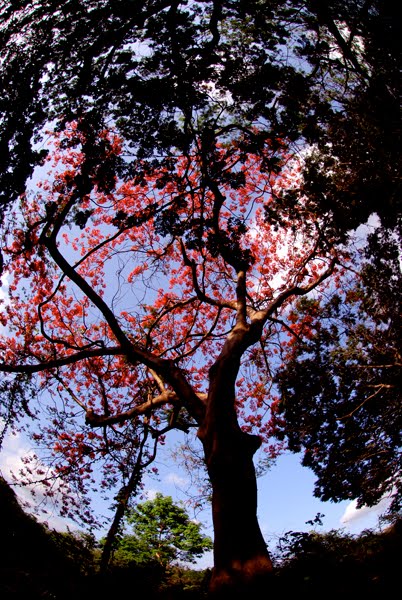
In another corner of the earth it is monsoon that ushers in the season of flowers and you feel like whistling even though your shoe is full of slush.* After the May flowers are done with their fiery display a cloud chased by another and then another comes bursting through the sky. And the forecast promises rain. And more rain. Days upon days of rain. As buckets of rain begin to fall, the children start dancing in the street their faces uplifted to the sky.

In another part of the city a different kind of celebration is underway.  Every walk through overgrown, dense vegetation bustling with life is too put it blandly an adventure. And if, like me, you have an irrational fear of snakes often a heart stopping one. But the raindrops come falling and flowers, some only half awake, nod in tandem. From high up in the trees the koel (cuckoo) sings a– in part melancholy, in part joyous– tune; much like the monsoon state of mind.

Thus in another hemisphere, in another era, a poet puts his pen on paper in praise of the darkening skies and clouds bulging with the promise of rain.

Wildflowers in order of appearance:
Celosia argentea (known as cockscomb in the gardens).
Argeya nervosa or woolly morning glory or elephant creeper (leaves look like elephant's ears), native to India. Known in Hindi as ghav bel (gugguli).
Forest turmeric (wild haldi– the first flowers of the monsoon).
Hibiscus tertaphyllus (wild bhindi/lady finger/okra).
Commelina or dayflowers.
Costus speciosus (crape ginger, known as keukand in Hindi).
Smilax fruit. The plant is known as kumarika in Hindi.
Trichosanthes (belongs to cucumber family; same family as gourd and pumpkin).
Red Java tea a medicinal plant native to India.

All flowers identified with help from Flowers of India and SGNP flickr group.

*Spring is when you feel like whistling even with a shoe full of slush. – Doug Larson

Wednesday, 10 November 2010

I Am!


I am! yet what I am none cares or knows,
My friends forsake me like a memory lost;
I am the self-consumer of my woes,
They rise and vanish in oblivious host,
Like shades in love and death's oblivion lost;
And yet I am! and live with shadows tost

Into the nothingness of scorn and noise,
Into the living sea of waking dreams,
Where there is neither sense of life nor joys,
But the vast shipwreck of my life's esteems;
And e'en the dearest—that I loved the best—
Are strange—nay, rather stranger than the rest.

I long for scenes where man has never trod;
A place where woman never smil'd or wept;
There to abide with my creator, God,
And sleep as I in childhood sweetly slept:
Untroubling and untroubled where I lie;
The grass below—above the vaulted sky.

(I Am! by John Clare)

Monday, 16 August 2010

Tread lightly


There are only two ways to live your life. One is as though nothing is a miracle. The other is as though everything is a miracle– Albert Einstein

Watch what your hand brushes past. That curled leaf is an origami nest housing the single egg laid by the female giraffe weevil. The mother has thoughtfully injected a chemical into the leaf, so that its tissues undergo a cancerous growth and the larva when hatched gets sustenance.

Watch where you put down your foot next. The water running across the trail houses tiny monsoon crabs. Soon they will get busy burrowing into the soil, bringing in oxygen and keeping the cycle of nutrients flowing. But right now they watch you closely (almost sizing you up) for a split second before scurrying to safety.

Don’t come too close. That is not a dead leaf. It is the master of camouflage– the blue oak leaf butterfly. Its underside mimics a leaf perfectly down to the midrib. Would you believe that its upperside is a vibrant indigo?

So, please tread lightly. Here miracles abound. The tarantula has built trap doors out of silk thread, another spider is mimicking an ant as it goes out to hunt them, and another is weaving a fine web between the branches of the Kadamb tree– diversification and
specialization are the hallmarks among spiders too. Then there are the trees, the birds and maybe even a pair of eyes watching steadily.

Every mushroom, every termite, every falling leaf– every breath that is taken in and every breath released demonstrates a miracle. So, tread lightly and don’t forget to keep your eyes and mind open.

Thursday, 1 July 2010

Postcards from islands by the sea


Here is where the sky is blue! We reflect. Reality maybe deceptive.
But the truth is always true.

Home is a metaphor. A four letter word. A synonym for hope. A handful of twigs.

Everyone is equal beneath the clouds, besides the sea. The breeze that
caresses her, brushes the cheeks of he.

No one ever walks alone. There are the shadows. There is the sea. The sea.

(Mumbai, or Bombay as it was formerly known, is made up of seven islands. In 1782 the Hornby Vellard project was started to build a causeway to unite all seven islands into a single island with a deep harbour. With its completion in 1854, along with laying down of roads and the railway, Bombay became a major sea port in the Arabian Sea.)

Sunday, 20 June 2010

The Cannonball Tree

The Dutch are pragmatic, the English are self-deprecating, the Americans are “awesome” and Indians, well, Indians are officious. The above characterization is based on random observations of people and has never (almost never) been empirically proven. Though in the case of Indians the observation has been long and hard. And considering how the population at large aspires for a government job, very nearly true.

There are other observations too. In India, when someone says they love gardening they don’t mean they bend down on their knees and slog away come rain or shine. Or for that matter revel in the joy of watching a seed sprout tiny tendrils that would go on to become something truly beautiful. There are other miracles they prefer like the ones that turn a gerbera into a sunflower when it’s in a vase on their dining table. Actually what they mean is that they love the fact that they can afford someone to come 3 times a week to take care of “their garden”.

Also in India when they call a housing complex green, they don’t mean “green” in the environmentally-friendly sense. No, they don’t even mean it in the sense of the building complex having a park. They only mean that something green in colour maybe a few bushes or a few trees can be found in the vicinity.

While we are on the word park, it often means a patch of grass, there maybe some neatly pruned bushes, but what’s more important is the paved jogging track. Who said anything about the park in a city being a bio-diverse landscape with different species of native trees and plants, and birds, not to forget the odd wild mammal? Do you think you are living in London? Anyway we have “enough” National Parks in the back of beyond to spend our vacation at. And malls to spend our weekends in.

So, if you spot a cannonball tree that has attained its true majestic glory in the heart of Mumbai– don’t get excited. And don’t even think of taking photographs. There will always be some man who’ll come up and say, “Don’t take pictures. You are not allowed to take pictures” A tree can be easily ignored, and almost as easily chopped down. But the opportunity to extract a fine (should it be 50 or 100 rupees), especially where none exists, isn’t easily found. For what are rules– but made by humans like us? Did I tell you that Indians are officious?

Friday, 4 June 2010

Stories from the sea


Father And Child by William Butler Yeats

She hears me strike the board and say
That she is under ban
Of all good men and women,
Being mentioned with a man
That has the worst of all bad names;
And thereupon replies
That his hair is beautiful,
Cold as the March wind his eyes.


A Tale by Louise Bogan

This youth too long has heard the break
Of waters in a land of change.
He goes to see what suns can make
From soil more indurate and strange.

He cuts what holds his days together
And shuts him in, as lock on lock:
The arrowed vane announcing weather,
The tripping racket of a clock;

Seeking, I think, a light that waits
Still as a lamp upon a shelf, —
A land with hills like rocky gates
Where no sea leaps upon itself.

But he will find that nothing dares
To be enduring, save where, south
Of hidden deserts, torn fire glares
On beauty with a rusted mouth, —

Where something dreadful and another
Look quietly upon each other.


Behind, perhaps, let the sea blow… by Carlos Barbarito

Behind, perhaps, let the sea blow.
Let some word blow
outside every destination of slime, rust.
Perhaps ointments from Avicenna,
forests of embraces,
crops, swarms, humid implications.
Or, perhaps, the same.
It sits up. It gets dressed. It goes.
The grass stands up again.
At his step everything seems to find
inside itself a certain form of calm.
It can’t be a great distance
- he thought.

© translation: Brian Cole

Friday, 21 May 2010

Was there a time


Was there a time when dancers with their fiddles
In children's circuses could stay their troubles?
There was a time they could cry over books,
But time has set its maggot on their track.
Under the arc of the sky they are unsafe.
What's never known is safest in this life.
Under the skysigns they who have no arms
Have cleanest hands, and, as the heartless ghost
Alone's unhurt, so the blind man sees best.

(Was There A Time by Dylan Thomas)

Thursday, 18 March 2010

Dark blue coat


Evening
by Rainer Maria Rilke‎

The sky puts on the darkening blue coat
held for it by a row of ancient trees;
you watch: and the lands grow distant in your sight,
one journeying to heaven, one that falls;

and leave you, not at home in either one,
not quite so still and dark as the darkened houses,
not calling to eternity with the passion of what becomes
a star each night, and rises;

and leave you (inexpressibly to unravel)
your life, with its immensity and fear,
so that, now bounded, now immeasurable,
it is alternately stone in you and star.

(Translated by Stephen Mitchell)

Monday, 22 February 2010

Happily Ever After

The first time you hear them is when you are in the green vegetable isle stuffing handfuls of bhindi and broad beans into plastic bags. It is 8:30 PM on a Saturday night, so carbon footprint and food miles are not a priority; you simply want to get back home. That is the first time he says to her, “You don’t cook kathal these days.” She murmurs evasively. And since your mind automatically makes a mental note of the people you are eavesdropping upon (even if inadvertently), so as your hands pick and thrust through heaps of bhindi, you take a quick look. The man is your average urban Indian; overweight dressed in a striped t-shirt and jeans. A male version of the "Empress of Blandings". His wife by comparison is Piglet. Perhaps more accurately a grasshopper. Next to him, she looks thin, frail and nondescript. They are your age, probably younger, the mind notes and closes the file. The last observation seems mandatory these days.
It is the way he says kathal that makes your ears stand on edge. Visions of a cool and large kitchen, hands soaked in mustard oil, the sharpened knife just before it makes the first strike in what would be hours of extreme labour, float in from nowhere. And you move along towards the pile of tomatoes. The kathal almost forgotten.
Later when you are picking grapes, disgusted by the man next to you who squeezes each grape before putting the bunch in the bag, that you hear him again, “It has been ages since I had kathal.” This time you deliberately look up. They are standing in front of the pile of kathal. The wife seems to have shrunk further in the past ten minutes. The man continues, “Last time I had kathal was when mummy cooked it. It was absolutely delicious. You never cook kathal for me. Lets buy some kathal today,” he ends picking up one of the bigger specimens on display while the wife demurs, “yes, yes I will make kathal if that is what you want. Yes, yes lets buy some kathal. If that is what you like.”
Vision of a tiny kitchen in a one BHK flat, in a suburban housing society with the outer walls gray and green from years of neglect in the Mumbai monsoon; a tiny kitchen platform large enough to hold the gas stove and maybe, if the builder was a human, a few jars of spices, frail hands soaked in mustard oil, the knife hacking the kathal, the oil sizzling in the kadhai, the smoke reluctantly leaving the tiny kitchen window, the sounds from the TV in the hall blaring the SA vs. India one day match commentary, float in. As do other more profound visions of matrimony.
Kathal will definitely be served for lunch this Sunday. For theirs is a happy marriage.
(For M+C on ten blissful years of matrimony.)
*bhindi is the Hindi name for okra
**kathal is the Hindi name for jackfruit