Showing posts with label Writing. Show all posts

Sunday, 27 April 2014

On Failure

In certain classrooms in North America, teachers are discussing the existence of failure. The fact that one does not always succeeding in whatever one does in life. And that is OK. In a culture where nothing succeeds like success, how did it come to this? Here’s one explanation.

Please note: By young adult I mean anyone over the age of 15, old enough to read Emily Dickinson as well as P.G. Wodehouse and appreciate the beauty of both (in theory).

Scenario one:
A young adult gets ticked off in class. After class she logs on to Facebook and decries the “injustice” she has faced. Immediately gets a 100 likes and her hurt feelings are assuaged. One would like to point out that that’s 100 out of 6 billion, but one is too stunned by the parents (and their friends) applauding her rant. How about a chat on ‘learning from criticism’. Or for that matter the perils of writing out loud in anger that leads to loss of perspective. And grammar in today's world.

Scenario two:
A young adult writes a term paper and will go on to write countless more in the (at the least) 6 years she’ll spend in college. But the parents share it far and wide– a term paper on dialectic materialism or some such is suddenly deemed worthy of a Pulitzer. (Good luck dealing with rejection that is the one constant fact in every writer’s life, dear young woman.) I recall my college days. My parents would have said a simple well done and then directed me towards Stephen Jay Gould or Ursula K. Le Guin's The Left Hand of Darkness to widen my perspective. In short, encouraged me to read more and write better. That is if I had been silly enough to consider a term paper as something they deserved to suffer through too.

What I mean to point out is that there is a difference between encouragement and unfettered praise which is merely setting up someone for gigantic failure and heartbreak. A little jab of honesty is always better than a  lifelong burden that is a lie. What we are witnessing is a parenting fail perhaps. It seems parents are involved in ever minor, meaningless aspect of their child's 'education' but shield the child from the harsher lessons of life.

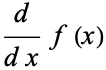
So we end up projecting mixed messages. On one hand we say, “You are a genius”. Then the young adult comes face to face with differential calculus: 
 d/(dx)f(x)
 
And we promptly produce the meme about how a fish can’t ride a bicycle and so on to prove everyone is different. However, no one tells the young adult that intelligence is neither inborn, nor an entitlement but something learned. It involves lots of hard work. And sometimes, no matter how hard we try it still eludes us. Just like life.

For parents in the above mentioned scenarios, here’s J.K. Rowling beautiful commencement speech on the ‘The Fringe Benefits of Failure, and the Importance of Imagination’.

Thursday, 10 April 2014

Why the cutrain is blue

I’m sure you must have come across ‘the curtain is blue’ meme at some point in time, where the teacher says the curtain is blue because the writer is depressed and the punch line is the writer saying ‘the curtain is blue, because it is f@cking blue’. It is supposed to be a joke on over-analysis (this in an age when no one has the patience to analyze what they say or tweet). To me the meme, besides showing that both the writer and the teacher aren’t good at their jobs (let the reader find the meaning) also highlights the crux of our ‘comprehension problem’. When even newspapers resort to headlines that provoke a reaction rather than encourage thought, it’s safe to conclude that comprehension and analytical thought are no longer our species strong suit.

Gabriel García Márquez explains (in The Art of Fiction No. 69, The Paris Review) why the butterflies are yellow (or the curtain blue):

INTERVIEWER
You describe seemingly fantastic events in such minute detail that it gives them their own reality. Is this something you have picked up from journalism?
GARCÍA MÁRQUEZ
That’s a journalistic trick which you can also apply to literature. For example, if you say that there are elephants flying in the sky, people are not going to believe you. But if you say that there are four hundred and twenty-five elephants flying in the sky, people will probably believe you. One Hundred Years of Solitude is full of that sort of thing. That’s exactly the technique my grandmother used. I remember particularly the story about the character who is surrounded by yellow butterflies. When I was very small there was an electrician who came to the house. I became very curious because he carried a belt with which he used to suspend himself from the electrical posts. My grandmother used to say that every time this man came around, he would leave the house full of butterflies. But when I was writing this, I discovered that if I didn’t say the butterflies were yellow, people would not believe it.

That is the hallmark of a great writer. Also the reason why good story-telling is so damn hard. (Complete interview here: http://www.theparisreview.org/interviews/3196/the-art-of-fiction-no-69-gabriel-garcia-marquez)

As an aside, years ago while reading ‘Life of Pi’, I came to the part where the family plans to migrate, and the mother thinks of all that she'll miss about her life in Pondicherry. Like all good writers to make the part believable Yann Martel names names– for example, the television, she’ll miss watching her favourite shows on, is an Onida, a brand well-recognized by Indians of a certain age because of its standout (though not necessarily good) advertisements that featured a green Devil like figure with the tagline ‘neighbour’s envy, owners pride’. But the novel is set in the summer of 1977. Onida TV began production in 1982. A novel whose premise is believability, is using specific details to make the story believable, but because of such seemingly minor inconsistencies suddenly became hard to believe. Suffice to say I couldn’t complete the book. (Also  Doordarshan, the government run sole TV channel in India, didn’t begin national programming until 1982 (the year colour TV was introduced). In 1975 it broadcasted to only 7 Indian cities.)

“…the slovenliness of our language makes it easier for us to have foolish thoughts.”
– George Orwell, Politics and the English Language (1946)
Orwell’s words hold true for all forms of communication in any language. Consider the election rhetoric in India. That's why one is grateful that there are people around who pay attention to not just what is said, but also the words used, the context and the tone. And insist that other people do so too.

Sunday, 12 April 2009

On Blogging

“I write fiction. Every incident that I have ever put down on paper is imagined. Also I am a compulsive liar. So now ask what it is that you wanted to know,” she says with a beguiling smile while moving her bejeweled finger as if conjuring up this entire rendezvous out of thin air.

“If only my life was as interesting as my words. If only the people I knew as enigmatic. If only…Ah! It is these ifs that probably made me a writer,” she continues as a tiny ting echoes when she picks up the cup. She must be at least eighty a faint voice seems to whisper.

A few hours and many such exchanges later she says, “One would think writing is as easy as snapping one’s fingers. Look at all of us. Are we all writers or what? Margaret Atwood, in a NY Times interview says of the flood of new writers ‘It’s like everyone’s blogging about how they brushed their teeth this morning.’ Though Margaret, the realist that she is, does say, ‘The myth that everyone once read great literature is just a myth.’ That probably explains 147 followers for someone who confidently misinterprets simple cinematic plots and if challenged hides behind the, ‘it’s my blog.’ defense line. How lovely.”

“Friends honour each other with awards and collectively feel creative and accomplished just like that. And to think it took Gabriel Garcia Marquez seventeen years to write The Autumn of the Patriarch. Mediocrity applauding mediocrity. Must be very comforting.”

“Oh yes! I would love to blog.”